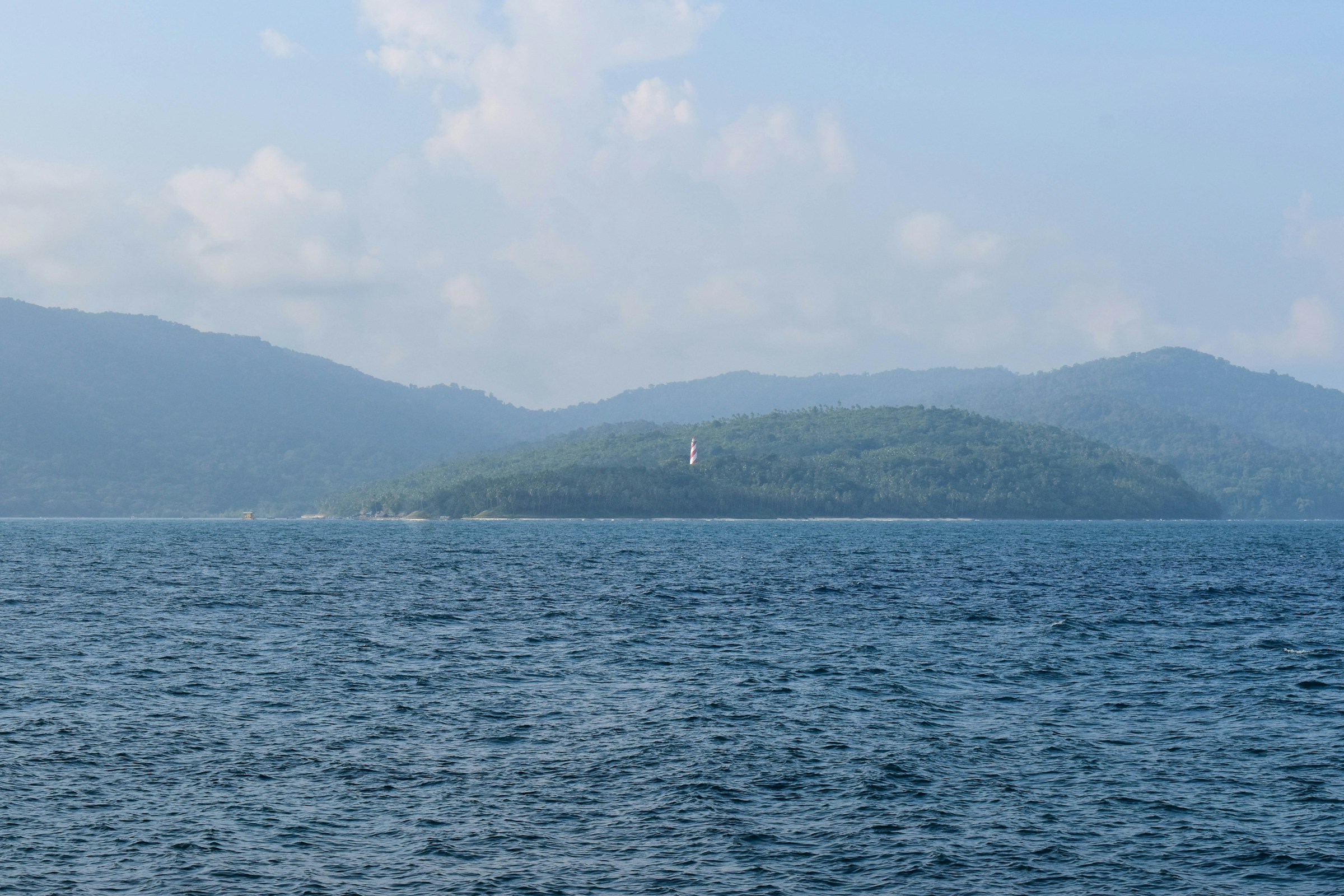

Some worlds are not waiting to be found.
They are waiting to be left alone.
The folklore of Little Andaman goes like this:
Do not cross where you are not called,
Do not name what does not ask,
Some lives stand whole without you,
Leave them to their quiet task.
The village had one rule: Never go near the Whispering Forest.
The Whispering Forest lies east of Little Andaman in North Sentinel Island, home to the Sentinelese, a dangerous, uncontacted tribe.
Here, the rule was never written. It lived in habit, in silence, in the way men steered their boats away without thinking. Nets were drawn early when currents leaned too far. Even birds, tracing long arc-like formations across the sky, turned before that shore
Fishermen from the mainland who drifted spoke contrasting stories about making hasty retreats mid-sea. Some said the whisper was wind caught in the trees. Others said it was the sea folding back upon itself when the tides turned. Or maybe the hiss of the angry sea-witch they feared.
They did not argue.
They drifted away to where they came from.
They went home.
In one piece.
Alive.
A few tourists came later in a long, whirring boat. Women donning large hats and dressed in weird colours. Men laughed with them and revelled as they rowed towards the forest.
Days later, their boat was found drifting, engine dead, an unnatural stillness resting on the water.
Missionaries came too, men who believed Holy Words could outrun fear. They spoke of light until arrows struck the sea beside them.
Others followed: smugglers, mercenaries, men who believed the world yielded to persistence and force. No one saw them returning.
Sometimes bodies washed ashore.
The villagers burned what they wore
and gave the rest back to the water.
And there had been a photographer.
He came alone, as they often do in the end, chasing something he called truth. He stood too long at the edge of the trees, his camera raised.
Days later, the sea returned him.
The elders never called these punishments.
Life was simple on this remote part of Little Andaman. Men in light muslin, the headman marked by a woven crown. Women with cotton wraps and wildflowers resting in their hair. Children barefoot, moving between shore and home.
Fishing.
Small fields.
The quiet labour of living, unnoticed.
Isolation was a shelter.
Then came Father John, the missionary from the mainland.
He was dressed in a simple priest’s habit, a worn rucksack on his back, a Bible, and a cross held close. The Headman received him in his hut.
“You may speak here,” the Headman said at supper. “Not there,” pointing towards the Whispering forest now engulfed in darkness across the black horizon.
“The Lord has sent me,” John replied in broken native language, “There are souls here who do not know Him, who live and die without His presence. I am the light of the world. Whoever follows me will not walk in darkness.”
“Go into all the world and preach the gospel to all creation. How shall they believe if no one goes?”
The Headman did not reply.
“If I must go alone, I will. If I must not return, so be it. Better to fall in His name than to turn away knowing I was sent.”
The headman’s voice remained calm.
“No one from here will take you. We do not go to that island, not for trade, not for curiosity, not for faith.”
“Then you are leaving them to perish.”
“We are leaving them as they are.”
That was all.
At dawn, Father John pushed his small boat into the water. The Headman watched. No one followed. No one stopped him.
By mid-morning, something had shifted. Work slowed. Words thinned. Eyes turned often toward the horizon.
By afternoon, the sea lay still.
Father John reached the shore. From afar, the island had seemed ordinary. Up close, it looked uncanny.
The Whispering Forest stood before him, dense, complete, uninterested.
He stepped onto the sand.
“Peace be with you!” he called.
The words fell short, as if the air refused to carry them further.
He walked on. The marshy earth shifted beneath his feet. The air thickened, though nothing moved.
He paused.
There was a sound,
or something like one.
Not words.
Not silence.
A whisper.
He could not tell if it came from the trees, the sea, or from somewhere closer or from inside him.
He tightened his grip on the cross
and stepped forward.
The forest did not open.
It did not need to.
Back in the village, evening came quietly.
At dusk, his boat returned.
Empty.
No one ran to the shore.
They already knew.
The next morning, the tide brought something with it.
His cross.
It lay on the sand, as if placed there, not carried.
No search was made. No questions asked.
Life resumed. Nets were mended. Boats went out again, careful, curving away.
Across the water, the Sentinelese remained
as they had always been.
Unchanged.
The forest remained.
The sea remained.
And the children still sang the folklore:
Do not cross where you are not called,
Do not name what does not ask.
Because the rule was never about the forest.
It was about knowing that not everything waits to be reached.
and that some silences
are not empty.
They are boundaries.
**********
Glossary:
Based on True events.
Credits: A few chapters from The 2023 National Geographic film The Mission, which explores the life and death of John Allen Chauwas, an American evangelist who was reportedly killed by the Sentinelese after illegally travelling to North Sentinel Island from Little Andaman, allegedly for religious conversion missions
Pic Credit: Unsplash.com/ Debarghya Meikap