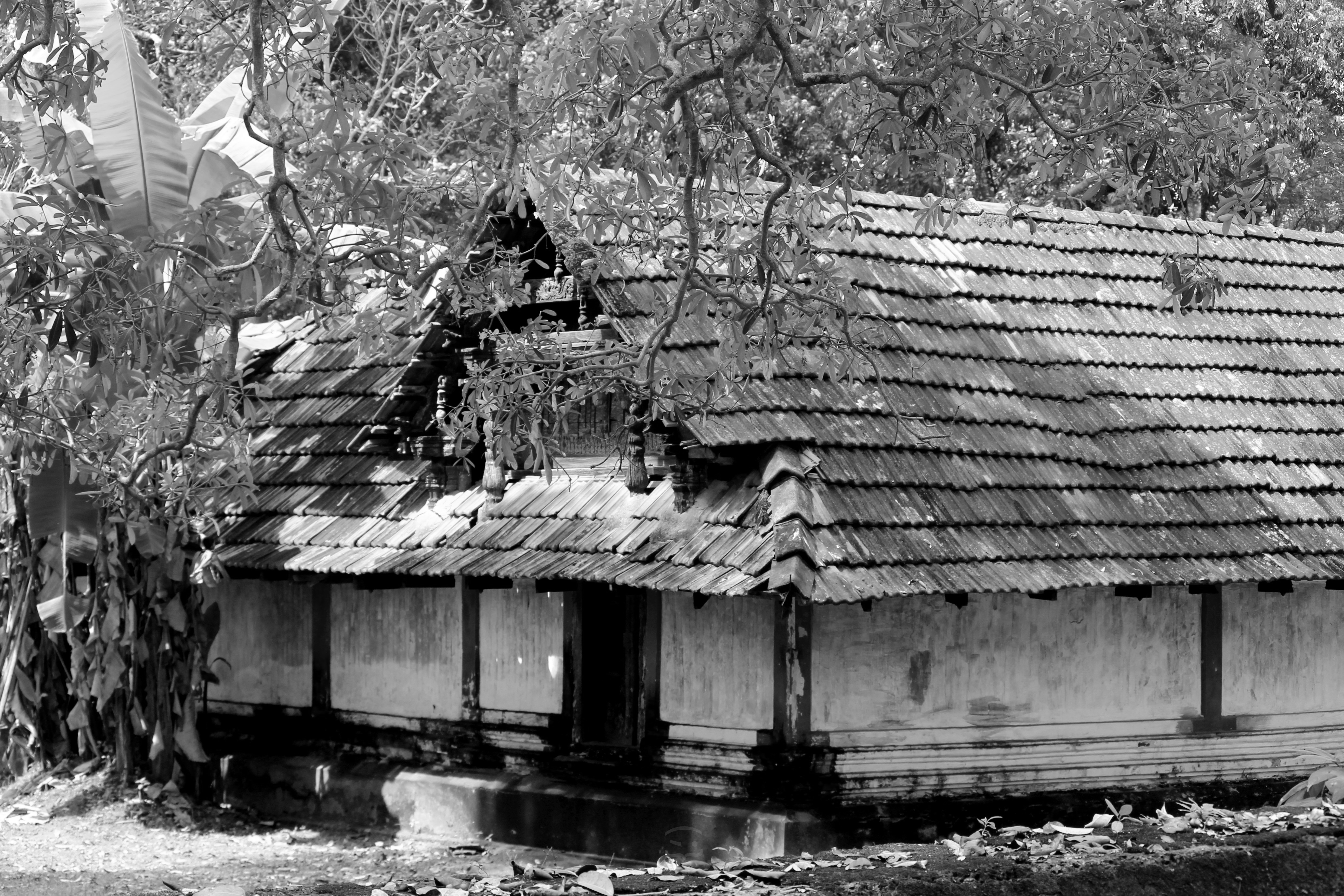

The house stood a few lanes away from the sea in Old Cuddalore, close enough that the air still carried salt, even years after the waves had come and gone. From the outside, it looked unchanged; the lime-coated walls fading toward yellow, a sloping tiled roof, and a wooden door swollen by humidity. These days, whenever Raghavan visited his ageing mother, the battered house felt dwarfed among the new multi-storeyed buildings rising around it.
The tsunami had not taken the house entirely. It had entered, touched, and withdrawn, resembling the plight of an accident victim who was neither living nor dying.
The thinnai, once wide and spacious, now felt cramped. As a boy, Raghavan remembered it as the centre of activity, where his grandfather, Venkatesa Iyer, sat every evening dispensing opinions, advice, and the occasional loan. Now the thinnai felt like a narrowed porch. A single unstable plastic chair and old copies of mostly unread Dinamalar newspapers and Kumudam magazines lay in a heap.
The neem tree that once shaded the entrance had died after the tsunami, its roots poisoned by seawater. Without it, sunlight fell harshly, revealing cracks that had always existed but had never mattered when the house was full.
Inside, the hall felt compressed. The wooden swing still hung from the ceiling, but its ropes had been shortened after floodwater weakened the beams. Raghavan remembered the swing on which his paati Lakshmiamma rocked gently and hummed, his mother Meenakshi shelled peanuts nearby, and his sister Kavitha pushed the swing too hard until someone shouted her name. His father’s absence had settled into the house early, so quietly that Raghavan had learned adulthood before he learned grief.
The swing no longer moved. It hung there, like an unsold antique in a flea market shop.
A faint waterline marked the wall, painted over but never erased. Below it, the tiles were newer and mismatched, laid in haste and without care.
The kitchen had grown quiet. During Pongal festivities, mornings spilled into afternoons, women moving around one another without colliding, their voices overlapping like music. Now, one corner remained sealed after the foundation cracked. The shelves held fewer vessels, and the silences between tasks lingered longer than they should have, settling heavily on Meenakshi’s shoulders.
The muttram felt smaller still. The thulasi maadam remained, its paint chipped and its plant sparse. The hibiscus plants in pots that his paati had once tended somehow still bloomed, stubborn and unattended.
That evening, Kavitha arrived from Pondicherry. Her words were practical, already decided.
“We should sell as soon as a buyer comes, anna. There’s no point waiting.”
Raghavan agreed. Even as he nodded, a quiet heaviness settled in him.
Meenakshi listened silently as she cooked supper for her visiting children, all grown now, all carrying homes of their own. Her saree was tucked high, her bangles silent. She did not interrupt or object. The ladle moved steadily in her hand, though the flame beneath it had already been turned low, as if she were cooking more out of habit than hunger.
That night, Raghavan slept on a jamkalam in his old room. The ceiling fan wobbled above him. On his phone, a message arrived asking how soon he would return. He read it once and placed the phone face down. Sleep came late, and when it did, it felt thin and easily disturbed.
When the broker left the next afternoon, the arithmetic became unavoidable. The sale would barely cover debts and leave enough for a deposit, certainly not enough to buy a house in the city. Kavitha lived in a two-bedroom flat already crowded by her husband’s aged parents, their medicines stacked beside the kitchen sink, their beds encroaching into the hall.
His own home was no solution either. Amma and his wife had never argued openly. Instead, instructions were passed through him, meals were eaten at different times, and silences thickened around small mistakes. When his wife spoke of space, she meant boundaries. Raghavan felt himself shrinking between these meanings, unsure where he was allowed to stand.
By afternoon, the decision hardened into fact. The house would be sold as soon as they informed the broker.
Later, Meenakshi moved through the house as if preparing it for inspection or for departure. She folded sarees already folded, aligned vessels that no longer crowded the shelves, and wiped the same surface twice. When the old maid asked where she would go next, Meenakshi smiled faintly and bent to rinse a tumbler that was already clean.
Raghavan stood by the doorway and looked at his mother, wishing she would ask him something simple, something he could answer without failing her. Meenakshi wiped the brass lamp harder than necessary, her movements precise and repetitive. When the lamp shone, she set it back carefully, as if aligning it for a house that still needed her. She did not ask where she would go.
The house stood quietly as Raghavan and Kavitha stepped out.
The next visit would be the last one to vacate, carrying with them a few materials and loads of memories.
Some places do not disappear, Raghavan realised as he walked to the bus stand. They condense. And when they do, the living must learn how to carry what no longer fits people, duties, and futures, without dropping anything that still breathes.
Glossary
Thinnai– a raised, shaded platform or verandah at the entrance of traditional South Indian homes
Paati– Grandmother
Muttram-Open to Sky central courtyard in traditional houses
Thulasi Maadam- a sacred, raised pedestal or pot-like structure used in Hindu households to house and worship the holy basil plant (Tulsi)
anna- elder brother
Jamkaalam- a traditional, durable hand-woven cotton carpet or rug
Pongal- Tamil Harvest Festival in January (Tamil Thai month)
Pc: Dileep Kuriyedath