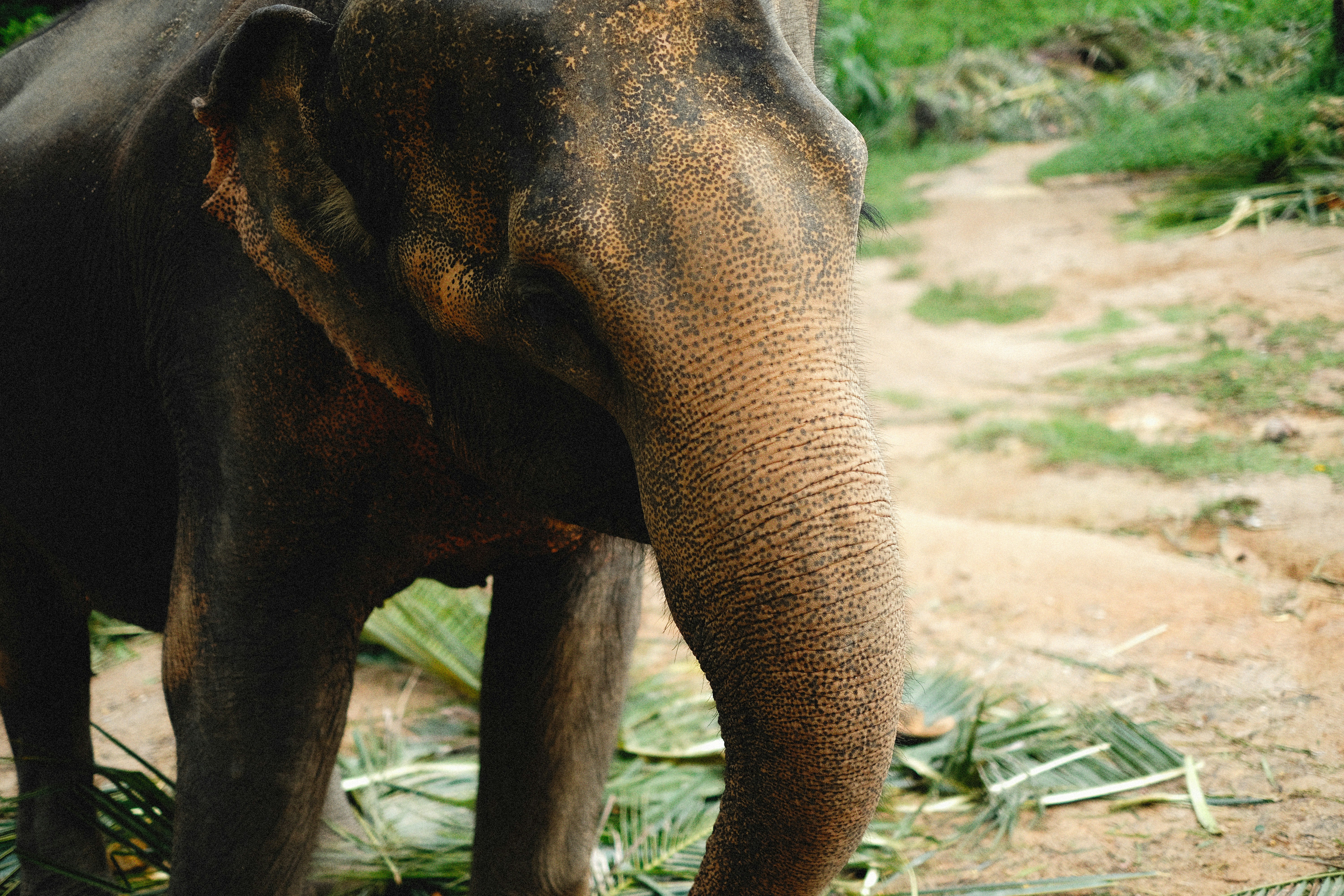

They named him Nandikeshan, after some guardian spoken of in the old records of the illam. A rusted sword still hangs in the eastern corridor of our illam in Ottapalam taluk. Sound always softened there. Even I walked slower in that passage, and I have walked it barefoot for years.
I come to the illam from a small village between Kumbidi and Pattambi, close to the Bharathapuzha river. By the time I began working there, authority had already slipped quietly into files and seals. Yet the illam survived through teak pillars, red oxide floors, prayer rooms heavy with the smell of oil lamps, and aristocratic habits. Nandikeshan was part of that life, more than any of us.
Every morning, before the conch was blown at the riverside temple in Thiruvegappura, I reached his shed. I came barefoot, bathed in the Bharathapuzha river, tulasi leaves crushed in my palm. I never spoke much in the mornings. Words should wait until the sun settles. Some beings understand silence better than speech.
Nandikeshan’s duties were light in my time. No wars, no grand parades, only the annual temple procession along the river road, and family rituals where his presence was still considered auspicious. He stood beneath the old banyan tree during ceremonies, walked behind the eldest member of the household to the temple, and blessed children by resting his trunk gently on their bowed heads.
Children were his favourites. When he let out a long, trumpeting yawn, some winced, some laughed. Nandikeshan learned early to be careful. Strength, even when given by birth, must be held back.
Once, a kalaripayittu ashan from a nearby village near Kumbidi came to the illam. He was an old man; lean, straight-backed, his arms always glistening with oil. He had been invited to train the younger boys of the household. For a long time, he stood watching Nandikeshan without speaking.
At last, he turned to me and asked, “Does he know his strength?”
“Yes,” I said. “That is why he is safe.”
Ashan nodded. He stepped forward, placed his palm briefly on Nandikeshan’s forehead, and stepped back. Nandikeshan did not move.
“Real power,” the ashan said, “is when the body can destroy, but the mind chooses restraint.”
In the kalaripayittu, the hardest lesson is not how to strike, but how not to.
I remembered that. I had seen boys leap, strike, and fall in the kalari. But Nandikeshan stood still. I realised then that restraint, too, was a form of training.
In the afternoons, when the illam slipped into its long siesta and the heat pressed down on Ottapalam taluk, I rested beside Nandikeshan in the shade of the banyan tree and watched the Bharathapuzha beyond the compound wall. From that stretch, we could see fishermen casting nets and women washing vessels at the stone steps downstream.
I often wondered if Nandikeshan remembered his younger days, the days when he might have walked forests and chosen his own paths. Perhaps the restlessness in his feet came from such memories. The illam had given him rhythm, respect, and purpose. But freedom does not leave an elephant. It only waits.
The illam changed, slowly but surely. Oil lamps gave way to electric bulbs. Buses from Pattambi replaced bullock carts. Only the thamburatti noticed everything; how Nandikeshan’s left ear drooped a little more each year, how he lingered longer by the river on full-moon nights.
That evening, during the annual procession, the chenda drums were louder than usual. Firecrackers burst too close. A sudden scream cut through the noise. Nandikeshan froze. I felt the fear before anyone else noticed it. I did not shout.
“Easy, moné. I am here.”
That was enough. He stayed. The people never knew how close that night came to breaking, how years of trust and quiet companionship had held the line.
Later, when the lamps dimmed and stars appeared over Thiruvegappura, the thamburatti came to him herself. She placed a ripe nendran banana in his trunk. Once, that would not have been permitted. Her hand trembled slightly.
“You have carried us long enough,” she said softly. “Perhaps it is time we carried you.”
Weeks later, officials came from Palakkad. Papers were signed. The illam courtyard filled with whispers. One dawn, I walked Nandikeshan down the familiar path, not to the banyan tree, not to the temple, but to the forest land that lined across the Bharathapuzha river.
At the water’s edge, I stopped. No commands. No ropes. That is not how you part from someone who has trusted you all his life.
Nandikeshan hesitated. The forest smelled of memory and uncertainty. He turned once, looking back at the tiled roofs of the illam, a place that had given him discipline and dignity, even as it held him.
Then he stepped forward.
Even now, people from Pattambi to Kumbidi say they see a lone elephant at dusk, standing by the river, listening. Perhaps it is Nandikeshan. Perhaps not. Elephants do not announce themselves.
The illam still stands. The banyan tree still casts its shade. But something essential is missing. Some beings hold silence together. When they leave, you hear the absence.
Some lives are measured not by the paths they take, but by the strength with which they choose to stop.
Glossary:
Illam– An ancestral home in Kerala, typically a mansion owned by an affluent family.
Ottapalam, Kumbidi, Thiruvegapura, Pattambi- Places in Palakkad district
Bharathapuzha- Longest River in Kerala in Palakkad district
Tulasi- Holy Basil
Kalaripayittu– Martial arts from Kerala, Kalari- in short, Kalari also refers to the arena of the kalaripayittu practice
Ashan– master
Thamburatti– Woman of (authority) of the house.
Mone– dear son/dear kid, affectionately called
Chenda– A drum ; percussion instrument from Kerala
Nendran- A type of plantain that’s a staple in Kerala
PC: Alexey Demidov